If you’ve been squatting for months and still can’t see glute development, it’s not your effort. It’s the exercise itself.
→ See the glute-specific training approach that actually targets the glutes
Squats have been marketed as the ultimate glute builder for decades. But the research doesn’t support that claim — and understanding why changes everything about how you train.
What EMG Research Actually Shows
EMG studies measure electrical activity in muscles during exercise — essentially showing which muscles are doing the work. When researchers apply EMG to squats the results are consistent: the quadriceps are the primary mover, not the glutes.
Your glutes are involved during a squat. But they are not the muscle driving the movement. Your thighs are. That’s why after years of squatting, many people have well-developed quads and flat, underdeveloped glutes. The exercise is doing exactly what it’s designed to do — it’s just not designed for glute development.
Why the Position Matters
The reason comes down to anatomy. During a squat your glutes are lengthened and the movement is driven primarily by knee extension — which is a quadriceps function. The glutes assist but they are never the primary muscle under load.
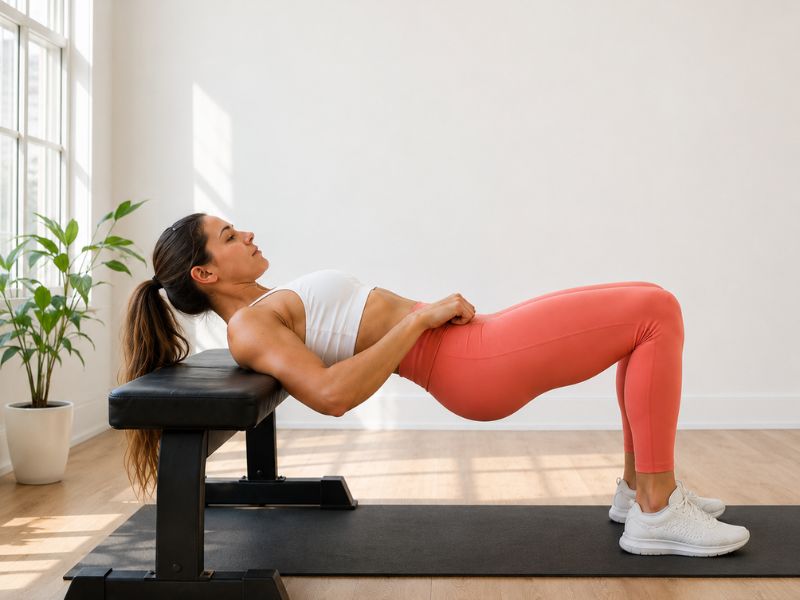
Compare this to a hip thrust or glute bridge where the movement is driven entirely by hip extension — which is the primary function of the gluteus maximus. The glutes are shortened at the point of peak contraction and they are doing all the work. This is why hip thrusts consistently score higher than squats on glute activation research by a significant margin.
The exercise you choose determines which muscle does the work. Squats choose the quads. Glute-specific movements choose the glutes.
→ See what a glute-specific training program built around this principle looks like
What This Means for Your Training
This doesn’t mean you need to eliminate squats. It means if building your glutes is the goal, squats shouldn’t be the foundation of that plan.
Glute development requires movements chosen specifically because they load the glutes through hip extension — not knee extension. That’s a fundamentally different exercise selection than what most standard leg day programs provide.
Sources: Journal of Strength and Conditioning Research — Contrasting Effects of Hip Thrust and Back Squat Exercises · Journal of Applied Biomechanics — Gluteal Muscle Activation During Common Exercises · Healthline — Best Glute Exercises
This article is for informational purposes only and is not medical advice. Always consult a qualified health professional before starting a new exercise program.