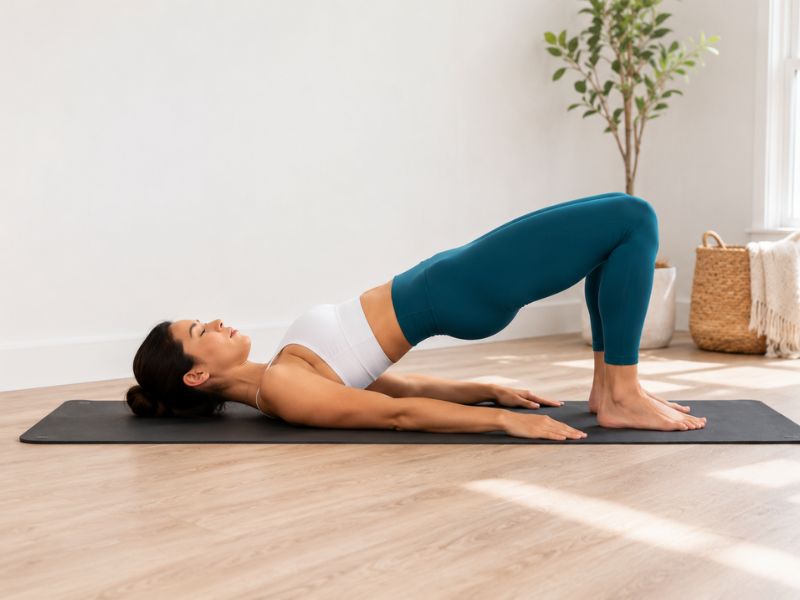
You’re doing the exercises. You’re putting in the effort. But you finish every workout feeling it in your thighs, your lower back, everywhere except your glutes.
→ See the activation-first approach that fixes this
This isn’t a strength problem. It’s a neurological one — and it has a name.
What Is Gluteal Amnesia
Gluteal amnesia is the term used to describe glutes that have essentially forgotten how to fire properly. The muscle is there. It’s not injured. It’s just stopped responding the way it should.
The most common cause is prolonged sitting. When you sit for hours your hip flexors — the muscles at the front of your hips — become shortened and tight. Tight hip flexors physically inhibit the glutes from contracting fully. Your nervous system starts routing movement through other muscles instead and over time the glutes become increasingly dormant.
What makes this particularly frustrating is that exercise alone doesn’t fix it. You can work out every day and still have gluteal amnesia because the underlying pattern — tight hip flexors overriding the glutes — doesn’t go away just because you’re moving more.
Why Other Muscles Take Over
When the glutes aren’t firing properly the body doesn’t just stop moving. It finds the next available muscle to do the job.
That’s usually the quadriceps, the hamstrings or the lower back. This is why so many people feel their thighs working during glute exercises, or end up with lower back fatigue after a workout that was supposed to target their glutes. The body is compensating — doing what it needs to do to complete the movement, just not with the muscle you’re trying to train.
Training a compensating pattern harder doesn’t fix the underlying problem. It just reinforces it.
The Fix Starts Before You Train
→ See how the prep-activate-train sequence addresses gluteal amnesia before a single rep is done
Addressing gluteal amnesia requires two things done in the right order before training begins.
First, releasing the hip flexors. When the hip flexors are tight they act as a brake on glute activation. Lengthening them removes that brake and allows the glutes to contract more fully.
Second, neuromuscular activation. This is the step that actually re-establishes the connection between your brain and your glutes. Specific low-load movements done before training prime the nervous system to recruit the glutes during the workout that follows.
This sequence — release, then activate — takes only a few minutes. But it changes what your glutes are actually doing during every exercise that comes after it.
Sources: Cleveland Clinic — Dead Butt Syndrome · Journal of Physical Therapy Science — Effects of Gluteus Muscle Strengthening on Lumbar Stability · Health.com — Gluteal Amnesia Explained
This article is for informational purposes only and is not medical advice. Always consult a qualified health professional before starting a new exercise program. This article contains affiliate links — if you make a purchase I may earn a commission at no extra cost to you.
Leave a Reply