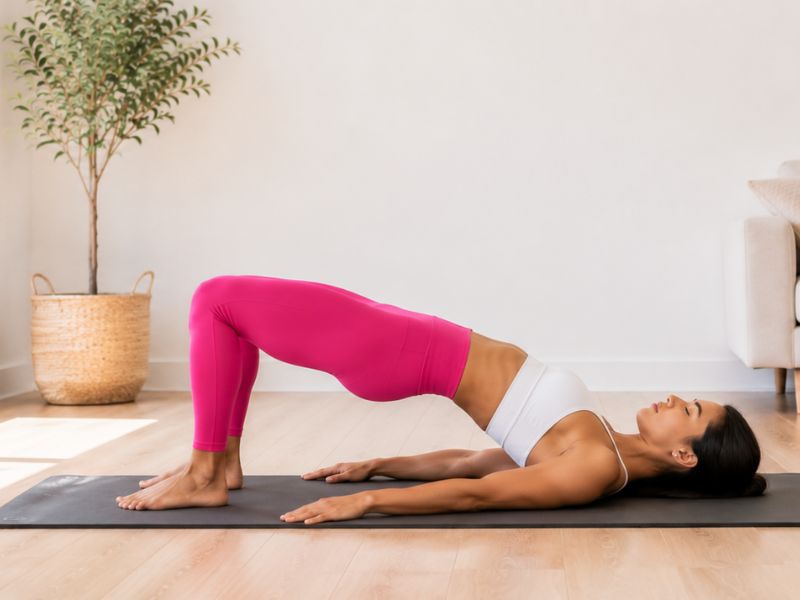
One of the most common assumptions about glute training is that a gym is required to see real results. It isn’t.
→ See how an at-home glute program is structured for people without gym access
Bodyweight glute training — when the right exercises are chosen and done in the right order — produces genuine glute development without a single piece of gym equipment.
Why Bodyweight Glute Training Works
The glutes respond to the stimulus of the movement, not the weight of the load. Research on bodyweight training consistently shows that muscle activation and growth can occur without resistance — provided the movement specifically targets the muscle and the mind-muscle connection is established before intensity is added.
For the glutes specifically this is particularly relevant. Hip thrusts, glute bridges, donkey kicks and fire hydrants all produce high glute activation scores on EMG research in their bodyweight form. These aren’t beginner placeholder exercises until equipment becomes available — they are genuinely effective glute-specific movements that can form the foundation of a complete program.
The Difference Between Bodyweight and Random Home Workouts
Not all at-home workouts produce the same results. The key difference between effective bodyweight glute training and random home workouts is structure and specificity.
Random home workouts often default to the same movements that don’t work in a gym setting — bodyweight squats and lunges being the most common. These movements have the same limitation at home as they do in the gym — they target the quads more than the glutes and don’t address the three planes of motion the glutes need.
Effective at-home glute training uses movements chosen specifically because they activate the glutes as the primary muscle — not the surrounding leg muscles. The structure matters too. Activation before intensity, coverage of all three planes and consistent session length all determine whether the glutes are actually doing the work.
Minimal Equipment Makes It Even More Effective
A basic resistance band is the single most useful addition to bodyweight glute training. Bands add constant tension throughout the movement — something free weights can’t always replicate — and they are inexpensive, portable and require no setup.
→ See the full at-home glute program with bodyweight and band options for every exercise
Lateral band walks, banded glute bridges and banded clamshells all produce significantly higher glute activation than their bodyweight versions. Adding a resistance band to an already effective bodyweight movement is one of the simplest ways to increase glute stimulus without any other equipment.
Consistency Beats Equipment Every Time
The most effective glute training program is the one you can actually do consistently. For many people that means training at home — no commute, no gym fees, no schedule constraints.
Two focused at-home sessions per week of around 15 minutes each, built around glute-specific movements with proper activation, produces consistent glute development over time. The location doesn’t determine the results — the quality and consistency of the training does.
Sources: Journal of Strength and Conditioning Research — Bodyweight Exercise and Muscle Activation · Journal of Physical Therapy Science — Resistance Band Training Effects on Glute Activation · Healthline — Best Bodyweight Glute Exercises
This article is for informational purposes only and is not medical advice. Always consult a qualified health professional before starting a new exercise program.