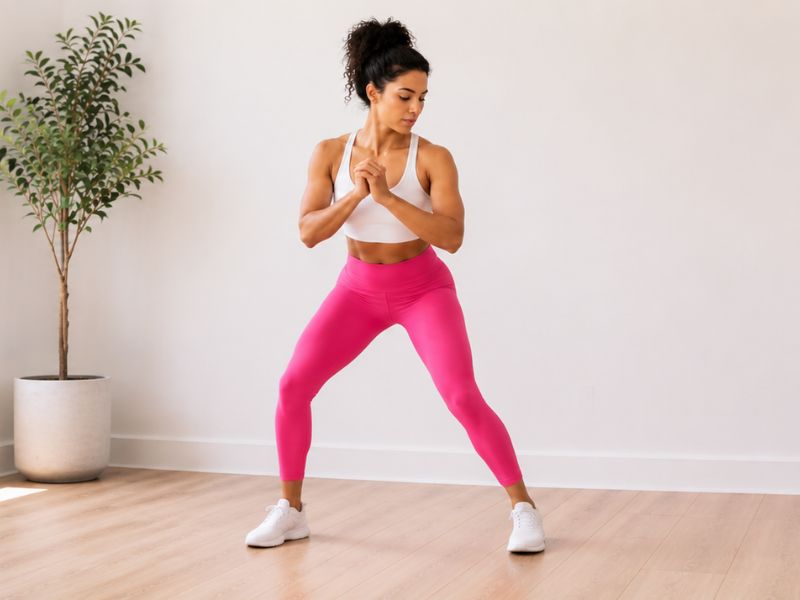
Most glute training programs have a structural flaw built into them. It’s not the exercises themselves — it’s the directions they move in.
→ See the training method that covers all three planes
Understanding this one concept changes how you approach every glute workout you do from here forward.
Your Glutes Are Three Muscles — Not One
The glutes are made up of three separate muscles — the gluteus maximus, gluteus medius and gluteus minimus. Each one has a distinct function and each one needs to be trained differently to fully develop.
The gluteus maximus is the largest and most powerful — responsible for hip extension, the movement of pushing your hips forward. The gluteus medius sits on the outer hip and controls lateral movement and pelvic stability. The gluteus minimus is the smallest and deepest, assisting with rotation and stabilization.
Training one doesn’t train the others. And most standard programs only really target one.
What the Three Planes of Motion Actually Mean
Human movement happens in three directions — and your glutes need all three to fully develop.
The sagittal plane is up and down movement — hip thrusts, glute bridges, deadlifts. This is the plane almost every program covers.
The frontal plane is side to side movement — lateral band walks, fire hydrants, side lying clamshells. This is where the gluteus medius gets targeted specifically. Most programs skip this almost entirely.
The transverse plane is rotational movement — movements that involve twisting or rotating the hip. This plane is the most commonly ignored of the three and the gluteus minimus is rarely trained directly as a result.
If your program only moves up and down you are training one plane out of three. That means two thirds of your glute muscle is consistently undertrained regardless of how hard you work.
Why This Explains So Many Plateaus
→ See how a program built around all three planes is structured
Glute plateaus are almost always a programming problem rather than an effort problem. When the same movements are repeated in the same plane the glutes adapt quickly and stop responding. Adding volume or intensity in the same direction doesn’t break through that adaptation — it just reinforces it.
Introducing movement in the other two planes gives the glutes a genuinely new stimulus. Different muscles get targeted, different fibers get recruited and the plateau breaks without needing to train harder or longer.
This is also why some people make strong initial progress with basic glute training and then stall completely. The sagittal plane movements produce early results. But without the other two planes the remaining two thirds of the glute muscle never fully develops.
Sources: Journal of Applied Biomechanics — Gluteal Muscle Activation During Common Therapeutic Exercises · National Academy of Sports Medicine — Planes of Motion Explained · Healthline — Gluteus Medius Exercises
This article is for informational purposes only and is not medical advice. Always consult a qualified health professional before starting a new exercise program. This article contains affiliate links — if you make a purchase I may earn a commission at no extra cost to you.
Leave a Reply