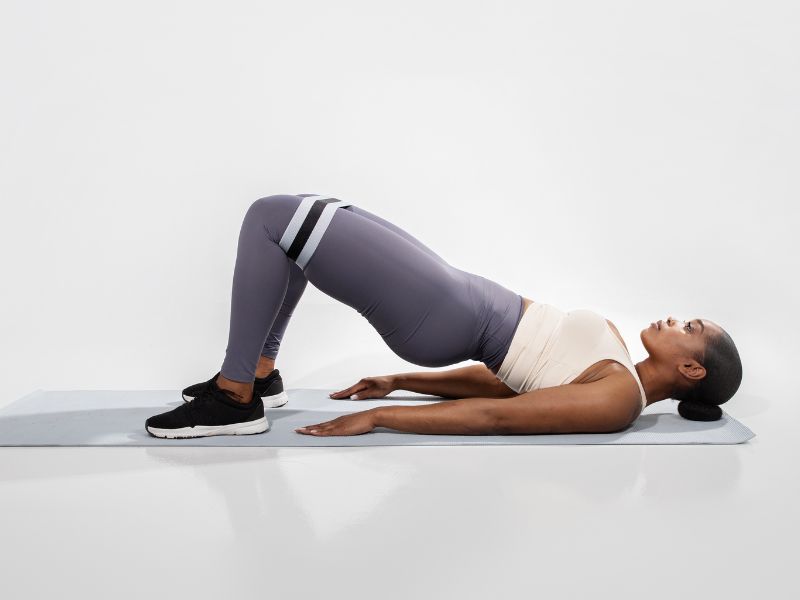
You can perform a glute exercise with perfect form and still get almost nothing from your glutes. The missing variable isn’t technique — it’s the ability to consciously feel and control the muscle while it’s working.
→ See how building the mind-muscle connection is built into this glute training approach
This isn’t a vague fitness concept. There’s real neuroscience behind it — and understanding it changes how you approach every glute exercise you do.
What the Mind-Muscle Connection Actually Is
When you perform any movement your brain sends a signal through your nervous system to recruit the muscles needed to complete it. The strength of that signal — and which muscles receive it — determines which muscles actually do the work.
For most people the glutes have a weaker neurological signal than the surrounding muscles. The quads, hamstrings and lower back are stronger, more dominant and more frequently recruited. When a movement signal is sent the nervous system defaults to those muscles first. The glutes get recruited last — or not at all.
The mind-muscle connection is the ability to override that default. To consciously direct the signal toward the glutes so they become the primary muscle responding to the movement. Research consistently shows that people who consciously focus on the target muscle during an exercise produce significantly higher activation in that muscle compared to people who focus on completing the movement.
Why This Is Especially Important for the Glutes
The glutes are particularly prone to weak neurological signaling for one simple reason — sitting. Prolonged sitting disrupts the nerve-to-muscle pathway between your brain and your glutes. Over time the signal weakens and the glutes become increasingly difficult to feel and control during exercise.
This is why so many people do glute exercises and feel them everywhere except their glutes. It’s not poor form. It’s a disrupted connection that form alone cannot restore.
How to Start Building It
Building the mind-muscle connection for the glutes requires two things done consistently before training.
First — releasing the muscles that are competing with the glutes for dominance. When hip flexors are tight and surrounding muscles are overactive the glutes struggle to fire even when you’re consciously trying to engage them. Addressing that competition first clears the path.
Second — low-load activation exercises that specifically practice the nerve-to-muscle signal without the distraction of heavy weight or fatigue. These aren’t warmup sets. They’re deliberate neuromuscular practice that trains the brain to find the glutes before intensity is added.
Once that connection is established every exercise you already know how to do starts producing a noticeably different response.
Sources: Journal of Strength and Conditioning Research — Attentional Focus and Muscle Activation · European Journal of Sport Science — Mind-Muscle Connection During Resistance Training · Verywell Fit — How to Build the Mind-Muscle Connection
This article is for informational purposes only and is not medical advice. Always consult a qualified health professional before starting a new exercise program.